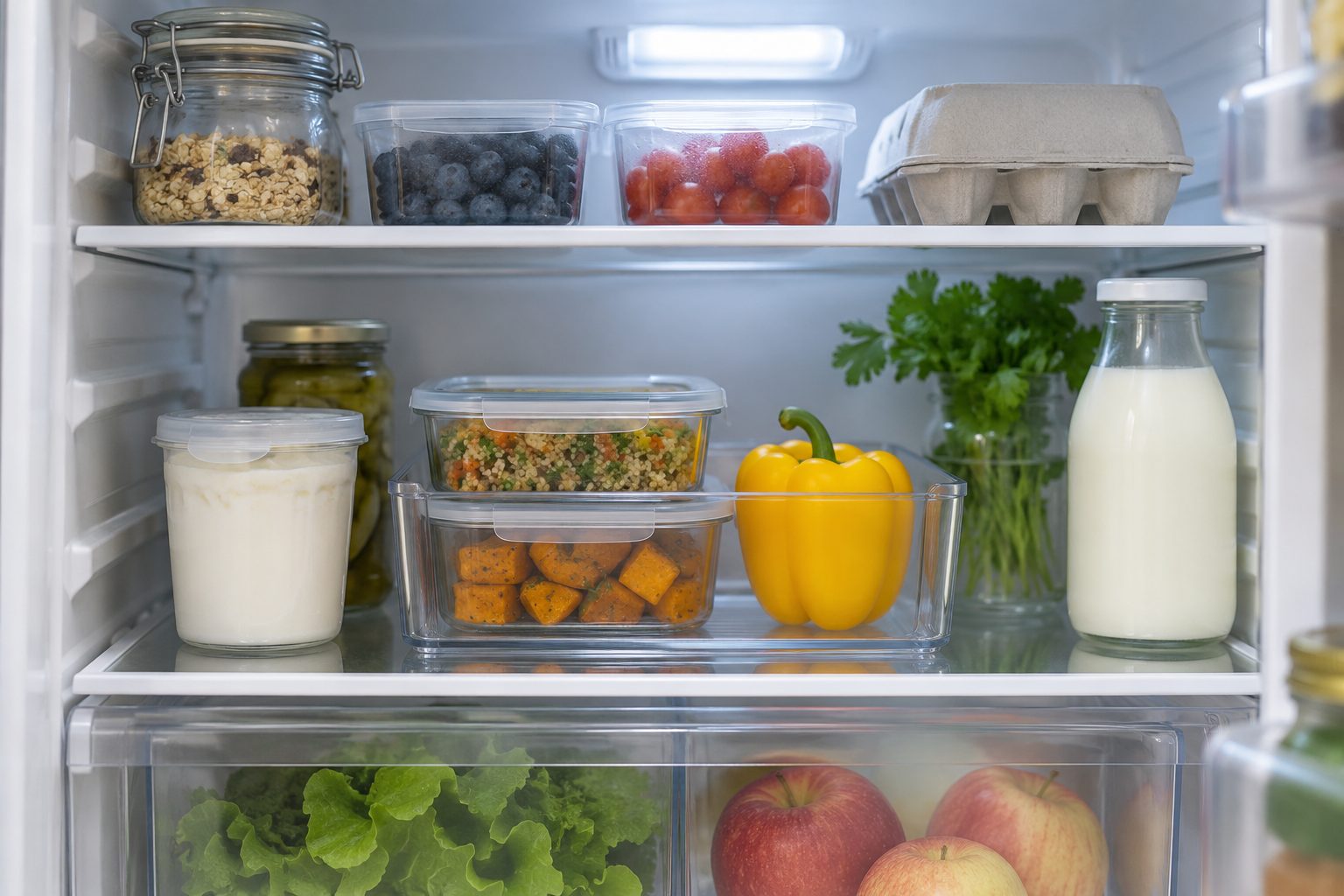
A grocery list usually begins with what you want. Try beginning with what’s already waiting for you instead.
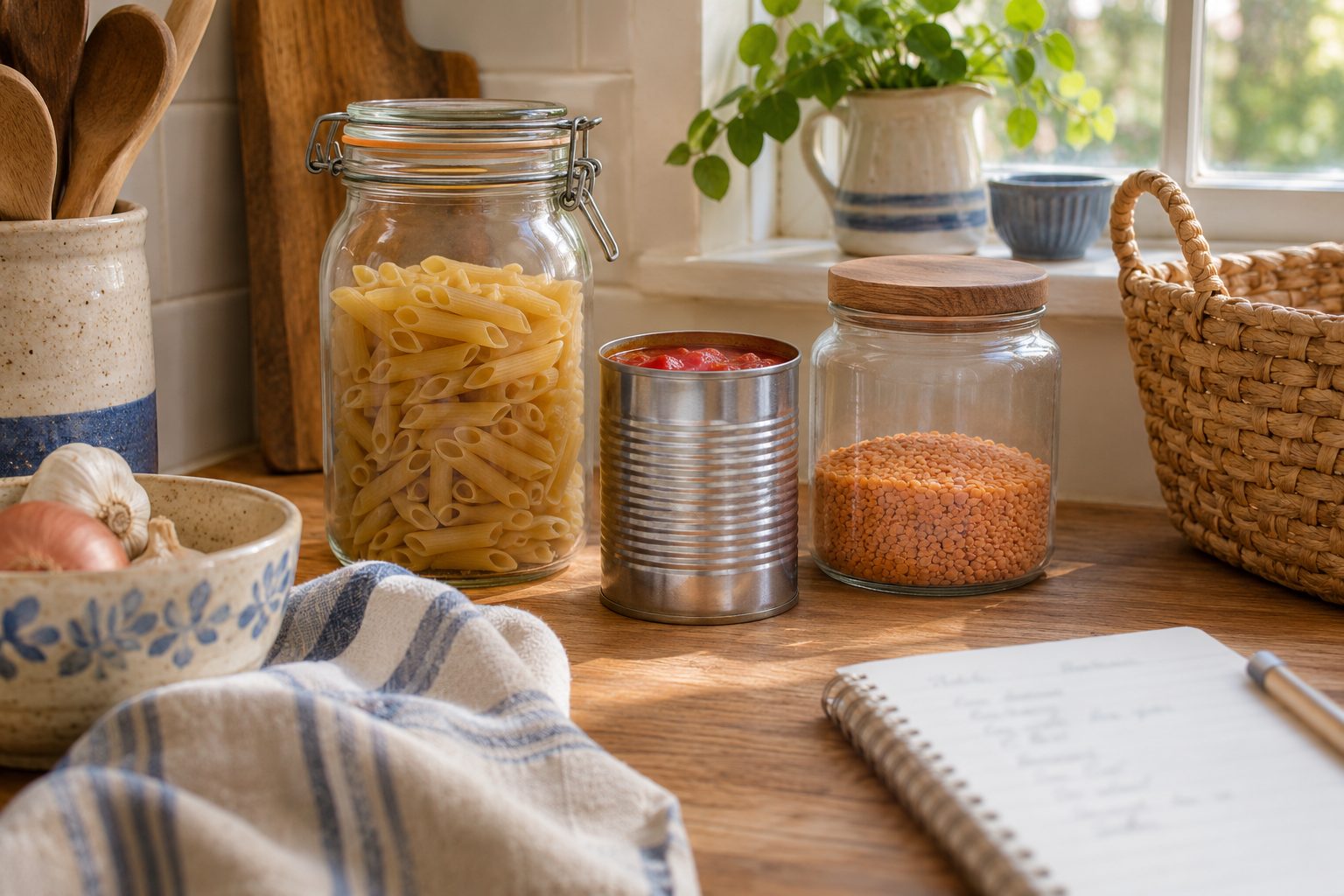
Open the cupboard and choose one ingredient you’d be happy to use this week. Maybe it’s pasta, lentils, or an unopened can of tomatoes. This is a planning exercise, not a challenge to turn every forgotten item into dinner.
Write a meal, not an inventory
Put that ingredient at the top of a page. Beside it, write a meal you already know how to make. Underneath, list the ingredients it needs in two columns: ‘have’ and ‘need.’ Only the second column goes on the shopping list.
For example, if you already have pasta and a suitable sauce, you might add the vegetables you want to serve with them. The point is to finish a simple plan rather than discover a complicated new recipe while standing at the cupboard.
Let the list stay short
Repeat the exercise for another meal only if it helps. You don’t have to label every shelf or track half a jar of cinnamon in an app. A photo of the cupboard before you leave can be a handy reminder, provided you can actually see what’s in it.
Use normal storage and date guidance. An ingredient being in the pantry doesn’t mean it is suitable to eat, and a meal plan isn’t a reason to use something questionable.
When you get back, keep the little ‘have and need’ note until you’ve cooked the meal. It’s easy to forget what those extra ingredients were meant for once they’ve disappeared into the fridge.